Pages

Monday, July 22, 2013

The Phantom of the Opera musical returns to Singapore


AsiaOne
Wednesday, Mar 27, 2013

SINGAPORE - The world's most successful and longest-running show on Broadway - The Phantom of the Opera - is returning to Singapore on Jul 16, 2013, for a strictly limited season.

The award-winning musical is set to take Singapore by storm when the show opens at The MasterCard Theatres at Marina Bay Sands.

Andrew Lloyd Webber's critically acclaimed masterpiece is now enjoying its 27th year on the West End stage, and its 26th year on Broadway, and continues to play to full houses around the world.

The Phantom of the Opera has been seen by over 130 million people worldwide, in more than 27 countries, has grossed more than US$5.6 billion and has won over 50 major theatre awards.

Producer Kerry Comerford of The Really Useful Group said "The Phantom of the Opera is an exceptionally unique musical for so many reasons, and sits in a class of its own. It has received incredible acclaim over the years, and to this day remains unrivalled by other musicals in its world-wide successes."

"This touring production of The Phantom of the Opera is as fine as any version you might see on the West End or Broadway - it is the same exquisite design that the audience is familiar with, and we invest a great deal to ensure it is of the highest standards.

"Our stellar cast assembles the industry's best performers, with members coming from leading entertainment destinations of the world; UK, USA, Europe, Australia and South Africa. The Phantom of the Opera has enjoyed huge success throughout the Asia-Pacific region, having experienced a sold-out season in Singapore in 2007 as well as Shanghai and Seoul, and I am confident that audiences in Singapore will welcome the return of this legendary musical."

The Phantom of the Opera tells the story of a disfigured musical genius known only as 'The Phantom' who haunts the depths of the Paris Opera House. Mesmerised by the talent and beauty of a young soprano - Christine - the Phantom lures her as his protege and falls fiercely in love with her.

Unaware of Christine's love for Raoul, The Phantom's obsession sets the scene for a dramatic turn of events where jealousy, madness and passions collide.

With 130 cast, crew and orchestra members, jaw-dropping scenery, breathtaking special effects and more than 230 costumes by international designer, the late Maria Bjornson, The Phantom of the Opera contains some of Andrew Lloyd Webber's most famous and stirring music, including "The Phantom of the Opera", "Music of the Night", "Angel of Music" and "All I Ask of You".

Andrew Lloyd Webber's musical is based upon the novel Le Fantome De L'Opera by Gaston Leroux.
Tickets will be on sale to Mastercard Priceless members only from Mar 25, 2013. General public ticket sales start from Apr 4, 2013.


The Phantom of the Opera haunts Singapore's stages yet again

phantom0107e.jpg
The cast of "The Phantom Of The Opera" performs at the 67th Annual Tony Awards, on Sunday, June 9, 2013 in New York. -- PHOTO: AP
 
By Corrie Tan

The Phantom Of The Opera seems to enjoy stalking Singapore's stages.

The masked spectre has skulked in the shadows of the Kallang Theatre (1995) and the Esplanade Theatre (2007). Come July 16, it will take up residence in the Grand Theatre at Marina Bay Sands.

Created by Andrew Lloyd Webber and directed by Harold Prince, the deeply romantic musical with its gothic overtones has been a smash hit worldwide, telling the story of a disfigured musical genius who falls deeply and tragically in love with a talented young opera singer rising through the ranks.

American actor Brad Little, 49, will be returning to Singapore in the role of the tortured, lovelorn Phantom. Little has performed the role more than 2,200 times across the globe.

Speaking to Life! at a stopover in Singapore last month, he says: "I love playing this role and I still do. I still find different energies, different ideas, something will just suddenly spark you'll go, wow, I never thought of it that way. Different Christines will bring something new."

In this production, the ingenue Christine - the object of the Phantom's obsessive affection - will be played by Australian actress Claire Lyon, 26, a newer addition to the cast. Little says fondly of his co-star: "She is Christine."

He adds: "Claire's career started off as a ballet dancer, went into classical singing, and then the understudy and then - it's amazing, the parallel of her career and Christine's career."

This year, the Phantom celebrates its 25th year on Broadway, where it remains the longest-running musical to date. Along the way, the beloved musical has picked up 130 million audience members in 27 countries and earned more than US$5.6 billion.

For more, read Life! tomorrow.
corriet@sph.com.sg

http://stcommunities.straitstimes.com/show/2013/07/01/phantom-opera-haunts-singapores-stages-yet-again

The Phantom of the Opera haunts Singapore's stages yet again


Production photos from the musical The Phantom Of The Opera by Andrew Lloyd Webber. Pictured here are Brad Little (as the Phantom) and Claire Lyon (as Christine). The Phantom Of The Opera seems to enjoy stalking Singapore's stages. -- FILE PHOTO: PHANTOM OF THE OPERA 


The Phantom Of The Opera seems to enjoy stalking Singapore's stages.

The masked spectre has skulked in the shadows of the Kallang Theatre (1995) and the Esplanade Theatre (2007). Come July 16, it will take up residence in the Grand Theatre at Marina Bay Sands.

Created by Andrew Lloyd Webber and directed by Harold Prince, the deeply romantic musical with its gothic overtones has been a smash hit worldwide, telling the story of a disfigured musical genius who falls deeply and tragically in love with a talented young opera singer rising through the ranks.

American actor Brad Little, 49, will be returning to Singapore in the role of the tortured, lovelorn Phantom. Little has performed the role more than 2,200 times across the globe.

http://www.straitstimes.com/breaking-news/lifestyle/story/the-phantom-the-opera-haunts-singapores-stages-yet-again-20130701

For Art's Sake: Phantom returns to haunt Singapore


Phantom returns to haunt Singapore

27 March 2013

SINGAPORE — Broadway’s longest running musical, The Phantom Of The Opera, is headed back to sing for Singaporean audiences once again when it opens at The MasterCard Theatres at the Marina Bay Sands from July 16, 2013 for a strictly limited season.

Last seen in Singapore in 2007, The Phantom Of The Opera is Andrew Lloyd Webber’s acclaimed musical that’s an adaptation of the novel Le Fantome De L’Opera by Gaston Leroux. It tells the tale of a masked musical genius known as “The Phantom” that lives in the depths of the Paris Opera House. He falls in love with the talented Christine — who’s actually in love with Raoul. What follows is a “dramatic” tale that’s been watched by over 130 million worldwide.

“This touring production of The Phantom Of The Opera is as fine as any version you might see on the West End or Broadway — it is the same exquisite design that the audience is familiar with, and we invest a great deal to ensure it is of the highest standards,” said producer Kelly Comerford of The Really Useful Group. 

“Our stellar cast assembles the industry’s best performers, with members coming from leading entertainment destinations of the world; UK, USA, Europe, Australia and South Africa. The Phantom Of The Opera has enjoyed huge success throughout the Asia-Pacific region, having experienced a sold-out season in Singapore in 2007 as well as Shanghai and Seoul, and I am confident that audiences in Singapore will welcome the return of this legendary musical.”

Tickets are now on sale for MasterCard Priceless members, and will go on sale for the general public from April 4. Tickets cost from S$55 to S$230, excluding the booking fee of S$3 per ticket. You can book online at http://www.baseentertainmentasia.com or http://www.marinabaysands.com/Ticketing, by phone at +65 6688 8826 or head down to get in person at the Marina Bay Sands Box Offices.

http://www.todayonline.com/blogs/forartssake/phantom-returns-haunt-singapore

The Phantom of the Opera returns to Singapore for second run


After six years, the longest-running musical on Broadway is back in Singapore. Andrew Lloyd Webber's The Phantom of the Opera opens at Marina Bay Sands this month and has extended its show until September due to ticket sales exceeding expectations.

21 Jul 2013

Saturday, July 20, 2013

Generation who refuse to grow up: No mortgage. No marriage. No children. No career plan. Like so many 30-somethings, Marianne Power admits she's one of them...

By Marianne Power

The other day I had lunch with my father, who was in London on business. He took me to his favourite pub and somewhere between the tomato soup and the mains he started a conversation that he has, until now — miraculously — avoided.

He glanced nervously at the waiter and sank his glass of wine before launching in, asking me what my plans are for life: Did I see myself settling down and starting a family? Am I saving up to buy a house? What is going to be the next step in my career?
There was a pause as I looked at him blankly and shrugged, before muttering that immortal phrase, loved by teenagers across the land: ‘I dunno.’

Except I’m not a teenager. I am 34. 

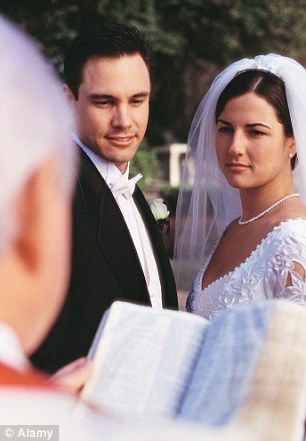
Refusing to grow up: Those adults who do not acknowledge responsibilities like marriage, children and their career have been dubbed 'the Peter Pan generation'

Refusing to grow up: Those adults who do not acknowledge responsibilities like marriage, children and their career have been dubbed 'the Peter Pan generation'

When he was my age, my father was putting my six-year-old sister and eight-year-old me through prep school, and had another three-year-old daughter at home. He had been running a business for ten years, owned a house and had a pension. 

In short, all the usual trappings and responsibilities of a middle-class man of that generation.

I, on the other hand, live in a rented flat with my youngest sister and have few savings to speak of. I certainly don’t have a pension. 

As for the idea of marriage and children, well, it’s exactly that: just an idea — it’s no closer to being a reality than it was when I was 23.
My ‘life plan’ as my father so sweetly called it, goes as far as this weekend.

‘Don’t you think you should start thinking about these things?’ he asked. ‘You do know you’re not 20 any more, don’t you?’

I’m not sure that I do.

While I am a fully paid up member of adult society in many ways — I pay taxes, cast my vote and give money to charity — in other ways, I am in hopeless denial about my age.

Settling down: Men and women are getting married later as they put up adult responsibility

Though I had always assumed that, by now, I would have found the love of my life and settled down, by choice or by fate (I still don’t know which) that hasn’t happened.

As a result, I behave in much the same way I did ten years ago, spending my money today rather than putting it aside for the future. Always grabbing one more night out with friends before the invites dry up. 

The thought of saving up the deposit for a flat is so daunting that I choose to throw money away on rent, instead. 

I haven’t yet had to grow up so, well, I haven’t.

Reckless, irresponsible and immature? Yes. But at least I can take comfort in the fact I am not alone.

Last week, I read that there is even a name for people such as me. We are the ‘Peter Pan generation’; a sizeable group of 25 to 40-year-olds who exist in a state of extended adolescence, avoiding the trappings of responsibility — marriage, mortgage, children — for as long as possible.

‘Our society is full of lost boys and girls hanging out at the edge of adulthood,’ says Professor Frank Furedi, a sociologist who has been studying this phenomenon, at the University of Kent. 

‘Another word sometimes used to describe these people is “adultescent” — generally defined as someone who refuses to settle down and make commitments, and who would rather go on partying into middle age.’

These people, he says, might live with their parents until they are in their 30s, choose to put off getting married as long as they can — or even remain single well into adulthood, continuing the life they had in their early 20s. 

You only need to look at the statistics to observe this intriguing trend. 

Back in 1970, men typically got married at 24 and women at 22. Currently, the average age at which people marry is 32 for men and 30 for women.

Why are the lives of my generation so utterly different from those of our parents?

A recent report shows that the number of women getting married in their late 30s and 40s has almost doubled in the past decade.

Meanwhile, the average age for starting a family today is 28 for women, up from 24 in 1970 . And, thanks to IVF and fertility treatment, more and more women are delaying starting families until they are 40.

What’s more, many more of us are deciding not to marry at all. Figures released by the Office for National Statistics at the end of last year show that more than half of women under 50 have never been married — double the figure recorded 30 years ago.

As for taking on the commitment of buying a house, in the Eighties the typical first-time buyer was 29. Today they are 38. And, according to a report by LV Insurers, by 2025, the average age of a first-time home-buyer is forecast to be 41. 

So why has all this come about? Why are the lives of my generation so utterly different from those of our parents?

Well, you could blame the economy. Taking that first step of becoming an adult — buying a house — is harder than ever. Every day we see new headlines about adults having to move back home with their parents to save the sizeable deposits now needed to buy a property.

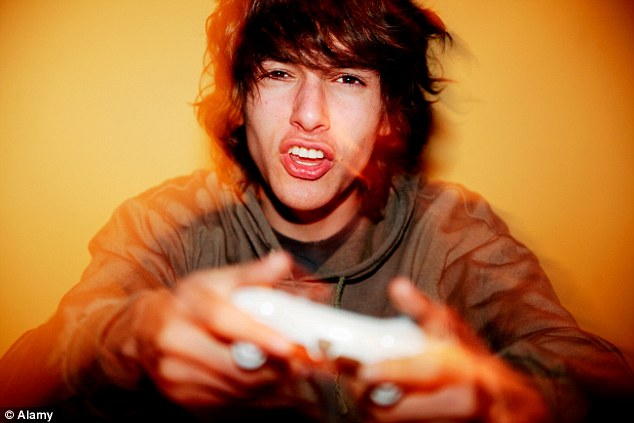
Hobbies like computer games are seen as ways for grown men to escape adulthood

Three million 20-to-34-year-olds now live with their parents. A third are men and 18 per cent are women. And that three million total is an increase of 20 per cent between 1997 and 2011, according to the Office for National Statistics. 

Even those who don’t live with their parents are more likely to be financially reliant on them. According to a report earlier this year, more than 13 million parents paid out £34billion in loans and gifts to offspring who are well into their 40s. 

My parents are not in a position to help me financially, and I find the task of saving for a deposit to buy a flat so onerous, and the reality of what and where I could afford to buy so depressing, that I’ve made the (very childish) decision to not even think about it.

'People are scared of thinking of themselves as adults. They cannot see anything good that comes with being an adult; all our cultural values are with youth.'

Which may hint at the real problem. Professor Furedi, who is in his 60s, says we cannot blame the economy — or property prices — for what he calls the ‘infantalisation’ of today’s adults. 

‘If you read the newspapers, all you hear is that young people’s lives have never been as horrible as today — which basically requires historical amnesia, because that is not the case. Recession and economic depressions have happened across the past century but, in my generation, the important thing was that you struck out on your own — even if you faced serious economic hardships and you were broke all the time. Now people make excuses,’ he says. 

He believes there are much bigger psychological factors at play — and that the root of our refusal to grow up is fear.

‘People are scared of thinking of themselves as adults. They cannot see anything good that comes with being an adult; all our cultural values are with youth and the further we move away from that, the more anxious we become,’ he says. 

Those who have teenage or childish hobbies as adults have been previously branded 'adultescents'

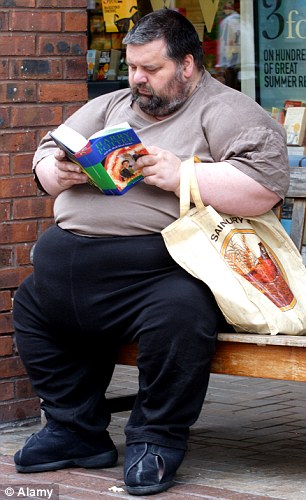
He believes that the trend for adults to read books aimed at children and teenagers (such as Harry Potter, Hunger Games and Twilight), the popularity of cartoons such as the Simpsons, and the rise of adults playing computer games, are symptoms of this desire to escape adulthood. 

‘People convince themselves that their immature behaviour is an attempt to become carefree, but it’s born out of fear. 

‘We now have a culture in which people are frightened of what the future might hold and are terrified of taking risks.’

This can apply to leaving home — or even falling in love. ‘People now avoid or postpone thinking about making a commitment to others for fear they will get hurt,’ he adds.

So am I scared of being a fully-functioning adult? Scared of financial and romantic commitments? 

Maybe, although I think it’s more the case that I have convinced myself that I don’t need to grow up — or settle down — just yet. 

While my parents’ generation went straight from education to working and starting a family, all in their early 20s, we have a window of opportunity that means we can play around for a bit longer. 

Contraception and changing societal attitudes mean that we don’t have to think about getting married and having babies straight away — and our career opportunities are myriad.

When my mother was coming of age, she had three choices: she could become a teacher, a nurse or a secretary. Her three daughters’ lives, however, are very different. 
We went to university and were told there was nothing in the world we couldn’t do. We rose the career ladder, travelled the world and had a freedom she could only imagine.
We were — and still are — spoilt for choice. And many people would argue that this is not a good thing. 

Just over ten years ago, a groundbreaking book by Alexandra Robbins and Abby Wilner coined the term ‘quarterlife crisis’ to describe the anxieties of a generation of 20-somethings who had the world at their feet, but no idea which direction to step in. 
We were, according to the authors, ‘suffocated by choice, responsibility and self-doubt’.

The decisions on whether to marry or not marry, start a family or not, travel or stay put, stick in your existing job or find a new one can make us overwhelmed, anxious and depressed.

Another more recent report, from Greenwich University researcher Oliver Robinson, found that the ‘demanding nature’ of 20 and 30-somethings means we ‘are not happy with a mediocre, ploddy, conventional life’ — in other words, the kind we think our parents have. 

But we’re not that happy with our freedom either. 

Actually, the decisions on whether to marry or not marry, start a family or not, travel or stay put, stick in your existing job or find a new one can make us overwhelmed, anxious and depressed. 

Of course, there is one decision that a woman — even of the Peter Pan variety — cannot put off for ever, and that is whether to have a child. 

For years, I was too busy working and having fun to even think about it — and now, even at 34, I have no idea if I want to be a mother. No maternal urges have kicked in yet and, besides, there is not exactly a line of suitors waiting at my door. 

Either way, I fool myself into thinking that I don’t have to decide just yet and cling to any headline about women having their children at 41 and 42 as proof that, yes, there is plenty of time.

But is there? The obvious truth is that fertility plummets in your 30s and I am worried that I will wake up one day and regret that I missed the boat on babies altogether. 

I talk about these issues with my fellow eternally young friends, but I’ve noticed, recently, that we are fewer in number than we once were. 

For while I have a handful of friends who, like me, are still busy living for the now, there are many more who have, almost without me noticing, found ways to buy the house and start a family. 

They are very happy in their new phase of their life, while I am still clinging on to the old one. 

In fact, I’m starting to think that there is a very real danger that, before long, I’ll be the last guest at the party, dancing alone, long after the music stops. And I don’t want that.
It reminds me of another less than flattering soubriquet for women such as me — TWIT (Teenage Women in their Thirties). 

Apparently, we’re propping up bars across the country, hoping the dim light disguises our wrinkles and that our Topshop outfits help us to blend in with the 20-somethings around us. And that’s a very sad thought. Perhaps it is time to finally grow up. 

Maybe after the summer...

Sunday, July 7, 2013

What caused China's cash crunch?

The Economist explains

What caused China's cash crunch?

The US-Mexico border: Secure enough


The US-Mexico border

Secure enough

Spending billions more on fences and drones will do more harm than good


Mexico’s middle class: Too bourgeois to bus tables

Mexico’s middle class

Too bourgeois to bus tables

Men's clothing: Suitably dressed

Men's clothing

Suitably dressed

The lounge suit, battledress of the world’s businessmen, is 150 years old—possibly

Saturday, June 29, 2013

Singapore gripped by Hello Kitty frenzy

Tempers flared and police had to be called in Thursday as anxious Singaporeans rushed to McDonald's outlets to buy Hello Kitty plush toys being sold by the fast food chain as a promotion.


SINGAPORE: Tempers flared and police had to be called in Thursday as anxious Singaporeans rushed to McDonald's outlets to buy Hello Kitty plush toys being sold by the fast food chain as a promotion.

Hundreds had begun queueing from Wednesday night to get their hands on a kitten in a skeleton outfit, depicting a character from the German fairy tale "The Singing Bone".

It was the last of a series of six limited-edition Hello Kitty characters dressed in different outfits from popular fairy tales which were being sold by McDonald's this month.

In some outlets, chaos broke out amid rampant queue jumping as supplies of the toys ran out soon after the stores opened for business on Thursday.

One video uploaded on YouTube showed police officers mediating between two customers in front of a McDonald's counter.

Another showed an irate man asking an agitated crowd "Is he Singaporean? Is he educated?", apparently in reference to someone who had gotten a queue ticket ahead of others.

Some customers took to Facebook to register their anger after they went home empty-handed, while others immediately put the toys -- sold for S$4.60 ($3.62) with set meals -- up for sale online at far higher prices.

There were shocking auctions online, with bids as high as S$120,000. Channel NewsAsia was unable to verify independently if it was a genuine sale.

A viewer told Channel NewsAsia the plush toy is available at about S$7 from Chinese auction site Taobao.
Some Singaporeans are obsessed with completing the entire collection.

"This is absolutely ruining the Singapore reputation. Poor management and irresponsible," wrote Catherine Ong on McDonald's Singapore's Facebook page.

Others voiced their annoyance at compatriots who had let their Hello Kitty mania run out of control.
Singapore last went into a Hello Kitty frenzy in 2000, when McDonald's sold a series of the toys in wedding outfits to usher in the new millennium.

Hello Kitty, which started in 1974 in Japan as a moon-faced cartoon cat on a coin purse, has developed into a global cultural phenomenon.

Sanrio, the Tokyo-based company behind the Hello Kitty industry, says it now has around 50,000 different products on sale in 109 nations and territories.

Hello Kitty mania is also well-established in Hong Kong, where both men and women line up for hours outside McDonald's outlets during promotional schemes.

In 2008, Japan appointed the character as its goodwill tourism ambassador to China and Hong Kong.


What are the burgernomics of fancy fast food?

The Economist explains

What are the burgernomics of fancy fast food?

Teaching and technology: E-ducation

Teaching and technology

E-ducation

A long-overdue technological revolution is at last under way

Jun 29th 2013


“IT IS possible to teach every branch of human knowledge with the motion picture,” observed Thomas Edison in 1913, predicting that books would soon be obsolete in the classroom. In fact the motion picture has had little effect on education. The same, until recently, was true of computers. Ever since the 1970s Silicon Valley’s visionaries have been claiming that their industry would change the schoolroom as radically as the office—and they have sold a lot of technology to schools on the back of that. Children use computers to do research, type essays and cheat. But the core of the system has changed little since the Middle Ages: a “sage on a stage” teacher spouting “lessons” to rows of students. Tom Brown and Huckleberry Finn would recognise it in an instant—and shudder.

Now at last a revolution is under way (see article). At its heart is the idea of moving from “one-size-fits-all” education to a more personalised approach, with technology allowing each child to be taught at a different speed, in some cases by adaptive computer programs, in others by “superstar” lecturers of one sort or another, while the job of classroom teachers moves from orator to coach: giving individual attention to children identified by the gizmos as needing targeted help. In theory the classroom will be “flipped”, so that more basic information is supplied at home via screens, while class time is spent embedding, refining and testing that knowledge (in the same way that homework does now, but more effectively). The promise is of better teaching for millions of children at lower cost—but only if politicians and teachers embrace it.

Why is this time different? Largely because a number of big changes are coming at the same time: high-speed mobile networks, cheap tablet devices, the ability to process huge amounts of data cheaply, sophisticated online gaming and adaptive-learning software. For instance, new interactive digital textbooks with built-in continuous performance assessment can change in real time, depending on what and how much the pupil using it is learning (sometimes with the pupil being unaware that he or she is being tested). New data-mining software is able to predict when a pupil is likely to fail at reading or mathematics without special attention, allowing the teacher to intervene before it is too late.

Yes we Khan

Higher education is in the vanguard. Barely a year from its launch, Coursera, one of the pioneers in offering “massive open online courses”, now boasts more than 3.9m students worldwide, taking courses supplied by 83 partner institutions. Colleges have always been keen to experiment with technology: Britain’s television-based Open University is now 44 years old. But this time schools are following. Four years after Salman Khan gave up his job at a hedge fund to focus on making maths videos, the Khan Academy has 6m registered users, who solve (or try to solve) 3m problems a day, and it has broadened its curriculum far beyond maths. It is spreading beyond America, too. Carlos Slim, one of the world’s richest men, is said to be paying for a version of Khan Academy’s curriculum to be developed for schoolchildren in his native Mexico.

Edtech has collected other impressive advocates. Bill Gates calls this “a special moment” for education. Private-sector money is piling in. Rupert Murdoch, hardly a rose-tinted-specs technophile, is allowing Amplify, his digital education business, to run up losses of around $180m this year in hope of dominating an edtech market that News Corporation reckons will soon be worth $44 billion in America alone. GEMS, a Dubai-based education provider, wants to expand its use of technology in India and Ghana to reach children in remote areas.

Others are not so sure. Many parents already blame the “dumbest generation” on too much gaming, always-on computing and illiterate texting. Teachers may use edtech websites, but their unions are suspicious of anything suggesting that schools could get along with fewer teachers, and they dislike the idea of private companies such as Mr Murdoch’s News Corp making money out of education. There are also worries about privacy: edtech companies will end up with a vast store of personal data on pupils.

It seems to work

Most of these fears are overdone. For-profit companies have long been in the business of selling printed textbooks, and there is no reason why data-privacy laws cannot extend to students. The biggest question remains: will children learn more? That in turn relies on the teachers, because even the best technology will get nowhere without their support.

The evidence on the efficacy of edtech comes largely from America. Most of it suggests that when teachers have been properly trained, it works. Low-income students at Rocketship, a chain of charter schools in San Jose, California, which also use the technologies, outperform those living in the wealthiest districts in the state. Having performed well in various pilot programmes, Khan Academy’s adaptive software platform is now being rolled out across Los Altos, one of America’s wealthiest and best-performing school districts.

Edtech will boost inequality in the short term, because it will be taken up most enthusiastically by richer schools, especially private ones, while underfunded state schools may struggle to find the money to buy technology that would help poorer students catch up. Governments will have to invest to allow them to do so. Some already are. In South Korea high-speed internet access is the norm in schools. Barack Obama recently promised that America will follow. Laws may have to be changed to allow pupils to study with those at a similar stage of learning rather than be grouped according to their age. But the biggest challenge for many politicians will be confronting the enormously powerful teachers’ unions.

Parents and taxpayers should stiffen the politicians’ spines. Education has proved stubbornly resistant to the improvements in productivity that technology has brought to other jobs. This wave of edtech promises to change that. Technology has supposedly been on the verge of transforming education for over a century. This time it looks as though it will.

Atheists and Islam: No God, not even Allah

Atheists and Islam

No God, not even Allah

Ex-Muslim atheists are becoming more outspoken, but tolerance is still rare